




Understanding family and domestic violence in Australia – The latest evidence
29 October 2026
Family violence (also called family and domestic violence) is a serious and pervasive issue in Australian society. The family violence offender rate is at a record high and support services consistently experience strong demand. While there is stability or improvement on some measures of prevalence, family violence remains common in Australia.
Relationships Australia Victoria (RAV) holds considerable expertise in family violence, particularly within services supporting victim-survivors, and behaviour change work with men who use violence.
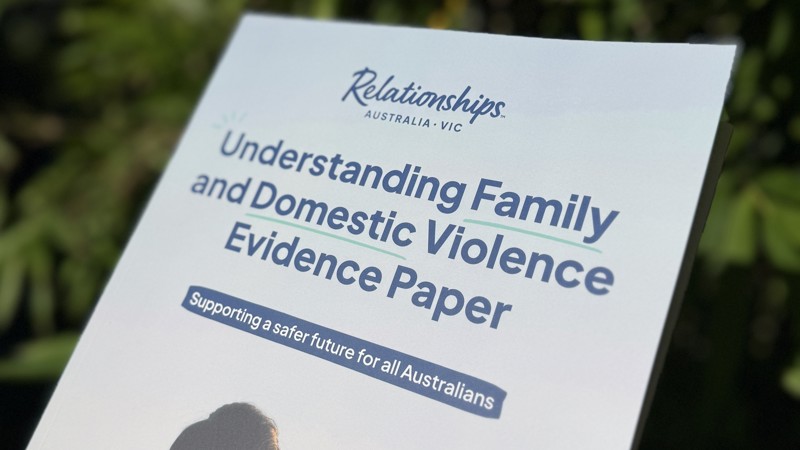
Our Understanding Family and Domestic Violence Evidence Paper summarises data and research on the prevalence, causes and consequences of family violence, and canvasses key flashpoints in academic and public discussion of family violence issues. It provides an organisational response to these data and issues, and affirms our commitment to a safer future for all Australians.
This year’s Paper follows the publication of our first family violence specialist report, a Family Violence Position Paper, in 2025, and reflects new data and insights from the past 12 months wherever possible.
New sections in 2026
- 2.1 Vulnerable populations
- 4.2.2 The role of family violence in suicide
- 5.4 Young people’s use of violence
- 6 Abuse of older adults
- 7.1.3 The ‘manosphere’
- 7.2.3 Grievance-fuelled violence
- 7.4 Protective factors against the use of intimate partner violence
All Australians should be safe within their intimate and family relationships. Much more work needs to be done to meet this goal.
This report is intended to support awareness and knowledge about family violence in our organisation and across our sector, including for those working in programs that are not specific to family violence, and in our community more broadly.
“Our Understanding Family and Domestic Violence Evidence Paper is part of RAV’s commitment to understanding family violence issues, keeping up to date with the latest information, and working to stop this major and challenging social problem.” – Dr Genevieve Heard, Manager Research
If we are to prevent future generations experiencing family violence, now is the time for additional investment in this work.